After my father was diagnosed with an aggressive type of brain cancer, there ensued a whirlwind of events typical of a terminal cancer diagnosis. The initial components are a bit of a blur in my memory. The tumor was removed completely as it had been contained in a sack, so they were certain they had gotten it all. However, based on the pathology, they told us that it would return and quickly. They decided not to do chemotherapy treatments for reasons I don’t recall. They instead prescribed a series of radiation treatments aimed at slowing the growth and maintaining quality of life. To access the tumor for removal, they had peeled back half of his scalp and drilled several holes in a circular pattern through his skull. They then played a game of connect the dots with the holes using a saw. This allowed them to lift off a piece of his skull, which had been turned into a lid of sorts, and get to the brain below. Once the tumor was removed, they put the skull lid back on, replaced the scalp flap and secured it in place with a couple dozen industrial staples. (Maybe there weren’t quite that many, and of course they were medical grade, cranium staples but the appearance was as I have described.) And so, they turned my father into a Frankenstein of sorts, physically anyway, which matched his mental state due to the brain trauma and swelling. He was given a course of steroids to reduce the swelling, along with a myriad of other drugs, and kept in the hospital for a week or two until the staples were removed. This gave us a little time to figure out a living situation.
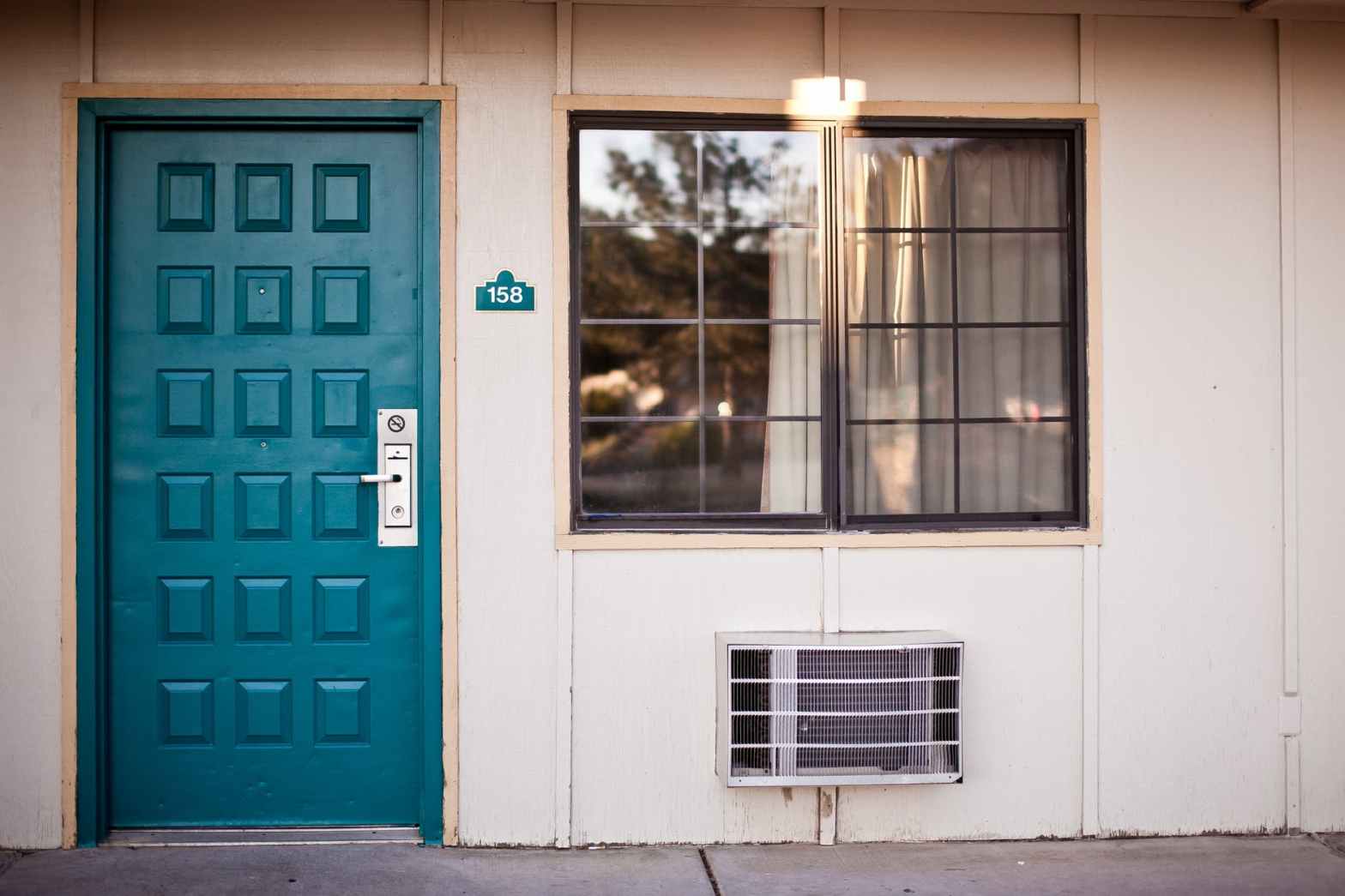
Since my father would require regular visits from a home nurse, we would not be able to go back to the house. He also needed to visit one medical facility or another most days, so we needed to find someplace to live that was located near his medical team. My mother settled on the Farwest Motel on Hwy 99 in Everett. This place was the definition of a seedy motel, which according to yourdictionary.com is “A gross hotel that rents rooms by the hour and that has old dirty carpet, worn rooms, and soiled linens.” But they also had very low weekly rates, and the truth was that it was luxurious in comparison to other places I had lived so I thought it was okay. We rented a room with 2 beds and a little kitchenette. It was clean by my standards and there was running water and television. The owners had two teacup chihuahuas that would bounce around the rooms as they were cleaned; I could fit one dog in each palm and found them to be just about the cutest things I’d ever seen. There were drugged-up tenants, and we could often hear the business operations of the local women of the night through the walls, but still—I couldn’t complain, not about the accommodations anyway. It wasn’t until I looked back on this time as an adult that I realized what a dump the place had actually been.
My mother worked full time at an administration job in Ballard, which left me as the primary caretaker for my father. He required around-the-clock care, the majority of which fell on me to provide. She was gone 11-12 hours a day Monday through Friday, and weekdays were when all his appointments were scheduled. The visiting nurse came by 2 days a week, if I remember correctly, and was the easiest of the appointments to manage because she came to us. It wasn’t always the same lady, and I did have to schedule the visits around his other appointments but that was easy enough to do. Scheduling care for a dying person was a new process for me and it was a bit of a learning curve. He had radiology appointments, neurologist appointments, appointments for the doctors treating a skin ulcer on his left hip (I forget what kind of specialty they were), appointments for scans and tests…it felt as if I had make appointments to schedule appointments. I was not accustomed to making calls and arranging these types of things, but I managed it with the help of a little notepad to keep track of the appointment times and using the most grown-up phone voice I could muster.
The scariest part for me was arranging the transportation. I had only just turned 15 so I didn’t even have my learners permit yet, let alone a driver’s license. I learned that I could use the DART bus system to get us around, but I had no idea how to do that. The well-intentioned doctor or nurse or receptionist who suggested I use DART was likely busy with their actual job, and maybe I was using too good of a grown-up voice, because despite my terror at the thought of figuring out this whole DART thing, no one offered to help me.
I do see the irony in the fact that taking the DART bus was the single most gut-wrenching element in this whole situation for me (including the actual medical caretaking, which I haven’t described yet) but I was petrified. This was a time before internet so I couldn’t just google how to do it. Armed with a phone book and stomach full of bile, I set off figuring it out. Can I tell you that the people who answer the DART phone are not concerned with the emotional well-being of a 15-year-old girl? The way the DART bus worked (at least back then) is you called and scheduled a time for pickup, which meant you had to calculate how long it would take you to get to where you were going. This is no easy task for a person who has never driven a car, in a time where there was no such thing as google maps. You must also factor in wait times upon arrival, as well as the fact that the pick-up/drop off times for the bus are not exact but rather a window since there are multiple passengers using the same bus, and things take time. You also need to either tell them when to pick you back up (uhhh idk…these appointments take as long as they take, and medical professionals don’t care about your DART bus schedule) or call them when you are done and wait around until they can come and get you and your half-dead dad. You also need to pay in cash and use exact change. Sigh. But as you have probably guessed by now, I put on my big girl pants and figured it out. The hardest days were the ones with multiple back-to-back appointments, those were a DART bus scheduling nightmare.
The appointments themselves weren’t too bad. The neurologist’s office was an old white mansion in North Everett, it was very fancy. His doctor there was a handsome young neurologist who was quite cordial, and the staff all treated the patients (and their daughters) like royalty. The radiology appointments as well as most of the scans were in the hospital, which meant that I got to eat in the cafeteria when we went there, and I loved the mashed potatoes with turkey gravy. The only appointments I disliked were the ones with the skin ulcer specialists and that was only because I thought they were idiots. My father had a large burn on his left hip that had ulcerated. He had obtained the burn from lying naked on a baseboard heater for who knows how long, while wedged between his bed and the wall prior to diagnosis. But the doctors with their medical degrees insisted that it was a bed sore and reassured me that they had correctly determined the cause because bed sores were quite common amongst cancer patients. Never mind the fact that the ulcer had started out as a burn that had ulcerated…but I was just a 15-year-old girl with eyes and a brain who had experienced the entire thing, so what did I know? In all practicality, it didn’t matter what the cause of the skin ulcer was, but I took issue.
The skin ulcer is a good place to start off describing my father’s end-of-life care. It was by far one of my least favorite parts. The ulcer was not small, it was on his upper left buttock near the hip and measured approximately 3” x 7”. This thing was nasty. I will attempt to describe it here but if you want a real visual treat type “skin ulcer” into google. It was a sort of hole in the skin, the edges were red and raised like angry scar tissue. The center was covered by some sort of scab-like substance that resembled wet, brown leather. The leather piece was mostly attached to the flesh underneath but pulled away a bit at the edges, and where it was attached was covered with a semi-liquid green substance that was wet and slimy feeling but didn’t rub off. The entire wound leaked blood and copious amounts of pus and smelled of rotting flesh. It was truly the stuff nightmares are made of. I am painting you this picture to help convey my horror at having to clean and dress this wound daily. It needed to be thoroughly cleaned so I had to really get in there and move it around, lifting the leather flap to wipe at the goo underneath. I possess neither a nurse’s heart nor stomach, so this daily ritual took all of my gumption to perform and was often accompanied by a gag response. The damn thing never did heal.
During the time my father was under my care, he was able to walk with the assistance of a walker. The hospital and some of the other medical facilities had wheelchairs we could use while we were there, but we didn’t have one to take with us. He wasn’t very steady on his feet and had no endurance, so trips anywhere usually involved many stops and impromptu rest breaks. This could be challenging because you didn’t want him to just sit down on the ground, where he tended to get stuck and could be quite difficult to right again once on the ground. When I saw him getting wobbly, I would frantically look around for a good resting place (he didn’t have the type of walker that had a little seat, I don’t know why). I learned to scope out my surroundings for potential improvised seating just in case it was needed. He made a habit of getting stuck on the toilet, which made the already awkward task of assisting my father in the restroom that much more unpleasant. He sometimes had accidents that needed to be cleaned up.
Another thing about dying people is they often don’t want to eat or drink. This can be frustrating for the person tasked with trying to keep them alive. I didn’t have any experience with cooking since many of the places I had lived didn’t have a means to do so. It was not something I was ever taught to do. But the motel room did have a mini-fridge and a little stove, so I gave it a go. I tried all sorts of things to try to entice my dad to eat. I scrambled eggs and sautéed mushrooms, sometimes he would force himself to eat what I had prepared simply because he knew the effort I had put into it. Most of the time he didn’t eat it though, even when I tried to spoon feed little bites into his mouth. I would sit on the edge of his bed with a meal replacement drink, coaxing him to take small sips. I would make a joke and when he smiled, I would ask him to take just one more drink. It wasn’t very effective, and he grew weaker. I tried to help him do little exercises while lying in bed by moving his legs around. I tried lying in my bed and doing the exercises with him and we would laugh, but he grew weaker. I got him treatment and fed him pills and dressed his wound daily, but he still grew weaker.
We were told that there was a risk he would start having seizures caused by the brain tumor. That was my biggest fear. I was terrified of being alone with my father in the motel room, or worse yet, out somewhere and having him collapse into convulsions. I knew what I was supposed to do in event of a seizure, but I wasn’t emotionally prepared to do it. Despite all the care I gave my father, I wasn’t a nurse, I wasn’t even a grown-up. I was a 15-year-old little girl, and I was scared.
My father wasn’t supposed to drive after he got sick. He would sometimes say that he was still perfectly capable of driving, but that clearly was not the case. He was a stubborn man. Occasionally on the weekends my mother and I would leave him alone in the motel room for an hour or so while we did the grocery shopping or ran other small errands. On one such occasion, my father took the opportunity to reclaim his freedom. He stole his own car and drove it to his favorite Denny’s restaurant, where he knew several of the waitresses. Upon arrival he went directly into the bathroom, where he had his first seizure. He was found on the bathroom floor by another customer and taken, by ambulance, to the emergency room. My mother and I arrived back to the motel room to find a note taped to the door by the motel staff, conveying a phone message that he was at the hospital. I freaked out. I went into full on panic mode and told my mother in a shrill voice between sobs that I refused to take care of him anymore. I told her that I could not and would not deal with him having seizures.
We put my father in a home. It was a minimal-care facility at first, but he quickly declined. We would visit him, and I often tried to call him during the day, but he very rarely answered. Sometimes when I called, his roommate, a younger man who had MS and required some help physically but who was completely present mentally, would answer my father’s phone (they each had their own phone next to their bed). He would give the phone to my father, but my dad would be incoherent and confused at best, sometimes not responding at all. He lost all ability to use the restroom on his own and continued to have seizures. He needed to be transferred to a full nursing facility.
At this point, my adult half-sister who lived in Vancouver WA opted to move him to a facility near her. She picked him up and drove him down to the nursing home she had selected. My mother and I would drive down every week or so to visit what was left of him, which wasn’t much. I hated going there. My father didn’t have much in the way of financial means, so he was in a low-cost facility. They didn’t offer diapering or IVs for their residents and everyone there was very ill, most near death. It was dark inside and it smelled of death and dying. The halls were lined with partially conscious people, their bodies slumped over in wheelchairs, many sitting in a puddle of their own urine which had spilled over onto the floor beneath them. A steady hum of moaning and wheezing accompanied us throughout our visits.
On one such visit, I brought him a bowl of warmed-up clam chowder from a can, which my sister assured me he would not eat. But as he sat propped up in a wheelchair in his tiny room, dressed in dingy, grey sweatpants with a dark stain spreading between the legs, he silently allowed me to spoon the entire contents of the bowl into his loosely opened mouth. That was the last time he ate. He then became unrecognizable, transforming into a skeleton with pale skin, his cheeks sunken in, eyes sitting deep within their sockets. His seizures increased in frequency to the point they were almost constant in the end.
It was during one of these seizure spells, which lasted several hours, that his body gave out completely. My mother and I were woken from our sleep that night by a phone call from my sister telling us that my father was gone. He passed away in the middle of the night, almost 6 months to the day after his initial diagnosis.

 Patchwork Girl